When Does the Forex Market Open: Trading Hours & Global Sessions Explained
In forex trading, timing is everything. The moment you enter or exit a trade can significantly affect your results. Understanding when the forex market opens, its sessions, and trading hours helps you plan your trades more effectively and choose the best times to trade based on global market activity.
What Are Forex Market Hours?
Forex market Open refer to the time periods when traders can buy or sell currencies. The market opens every Sunday at 5:00 pm EST and closes on Friday at 5:00 pm EST — making it a 24-hour market that operates five days a week.

Being the largest financial market in the world, forex involves millions of traders and institutions exchanging currency pairs across different time zones. While you can technically trade at any hour, knowing which session is active helps you maximize opportunities and minimize risk.
Understanding Forex Trading Sessions
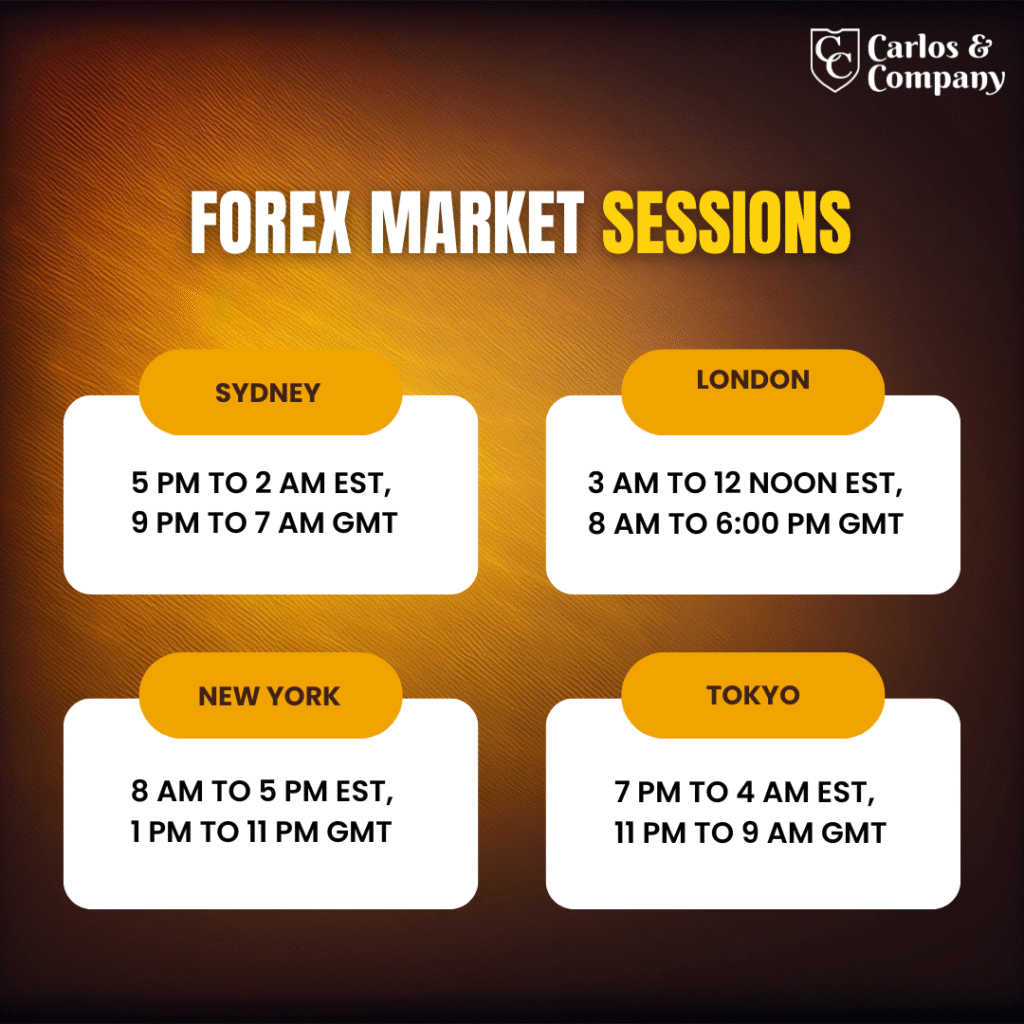
The forex market is divided into four major trading sessions, based on global financial centers:
Sydney Session
Tokyo Session
London Session
New York Session
Trading starts with the Sydney session, moves to Tokyo, then to London, and ends with the New York session. Because these sessions overlap, the market never truly sleeps during the week. However, trading halts on weekends, as major banks are closed.
Why Is the Forex Market Open 24 Hours a Day?
The forex market operates 24 hours because trading sessions in different parts of the world overlap across time zones. When one market closes, another opens — allowing continuous trading opportunities worldwide.
This structure lets traders from all regions participate whenever they prefer, regardless of day or night.
How 24-Hour Forex Timing Benefits Traders
For example, if an Australian trader wants to trade at 3:00 am, the Australian (Sydney) session may be closed. However, they can still trade during the European or North American sessions that are active at that time.
This flexibility ensures global traders can always find opportunities based on their schedule or preferred trading pairs.
Major Forex Market Sessions
Here’s a breakdown of each major session and its trading characteristics:

Sydney Session: 5 pm to 2 am EST, 9 pm to 7 am GMT
Sydney Session has low volatility and liquidity. The opportunities are limited. The forex market starts in Sydney, so traders are less active at that time. However, traders trading in Australian and New Zealand currencies can trade during this time
Tokyo Session: 7 pm to 4 am EST, 11 pm to 9 am GMT
Tokyo Session is more active than the Sydney but less active than the New York and London Sessions. However, these days, due to the advancement of Japanese currencies in the forex market, even these hours can provide you with great opportunities.
London session forex time: 3 am to 12 noon EST, 8 am to 6:00 pm GMT
The forex market working hours for the London sessions offer great conditions for traders. You can trade in valuable currencies such as GBP, EUR, and CHF during this time. Further, you can experience excellent liquidity, multiple opportunities
New York Session: 8 am to 5 pm EST, 1 pm to 11 pm GMT
The American session is the last and most liquid session. Most trading activities take place during these foreign exchange trading hours. The hours saw maximum releases of news and speeches, and are the best for trading USD pairs.
The London and New York sessions are the busiest, offering the highest volatility and best trading opportunities.
Forex Session Overlaps — The Best Times to Trade
The most active trading periods occur when two sessions overlap, as market liquidity and volatility both increase.
Here are the main overlaps (in GMT):
Sydney and Tokyo Session Overlap: 1:00 AM – 7:00 AM GMT
This overlap is moderately active compared to others. While it’s less volatile than the New York–London overlap, it offers more movement than the London–Tokyo overlap. During this period, pip fluctuations tend to increase, making it a favorable time for traders who focus on Asian currency pairs such as AUD/JPY or NZD/JPY.
New York and London Session Overlap: 1:00 PM – 5:00 PM GMT
The overlap between the New York and London sessions is the most active and liquid time in the forex market. Over 70% of total daily trades occur during these hours. The surge in activity is driven by the dominance of the U.S. dollar and the euro — the two most traded and influential currencies globally. This period is often considered the best time to trade forex due to high volatility and strong price movements.
London and Tokyo Session Overlap: 8:00 AM – 10:00 AM GMT
Although overlaps generally create great trading opportunities, the London–Tokyo overlap tends to be quieter than others. The limited two-hour window and the fact that most U.S. brokers are inactive during this time lead to reduced trading activity. Still, traders who prefer lower volatility might find this overlap suitable for more controlled, steady trading setups.
How to Find the Best Time to Trade Forex
Although the market is open around the clock, not all times are equally profitable.
When deciding your ideal trading hours, consider:
Currency Pair: Trade currencies during their regional sessions (e.g., trade JPY during the Tokyo session).
Time Frame: Scalpers prefer high-volatility sessions like London and New York, while long-term traders may prefer quieter hours.
Trading Strategy: Your risk tolerance, leverage, and strategy type should align with session activity and liquidity.
How to Calculate Forex Market Hours
Since each trading session opens and closes at different times depending on the time zone, use a Forex Market Time Zone Converter to track session status in real-time. This tool displays which sessions are currently open or closed and helps traders identify high-activity periods.
Focus primarily on Tokyo, London, and New York sessions, as they generate the majority of forex volume and volatility.
Forex Trading on Holidays and Weekends
Holidays and weekends affect trading volume and volatility.
During holidays, markets may partially close or experience lower liquidity. Beginners should avoid trading during these times, as price movements can be unpredictable due to reduced participation.
Similarly, during weekends, trading pauses but currency values continue to fluctuate — leading to gaps when the market reopens. Some advanced traders even develop gap-trading strategies to capitalize on these price movements.
Bottom Line: Time Determines Profit
The forex market gives traders the freedom to trade anytime, but success depends on knowing when to trade — not just what to trade.
A trader who understands market timing can maximize profits, while poor timing can lead to significant losses.
Remember — in forex, timing is everything.
If you’re struggling to identify the right time to trade, Carlos and Company can help.We provide forex signals and trade ideas tailored to different trading sessions
Comments
Post a Comment